Loading...
Serving Sebastian, FL and surrounding areas. (772) 918-9088
A railing that wobbles or rusts in Sebastian's salt air is not just an eyesore - it is a safety issue. We install new and replacement deck railings using materials rated for coastal conditions, fully permitted through Indian River County, with post anchoring built to Florida's wind-load requirements.
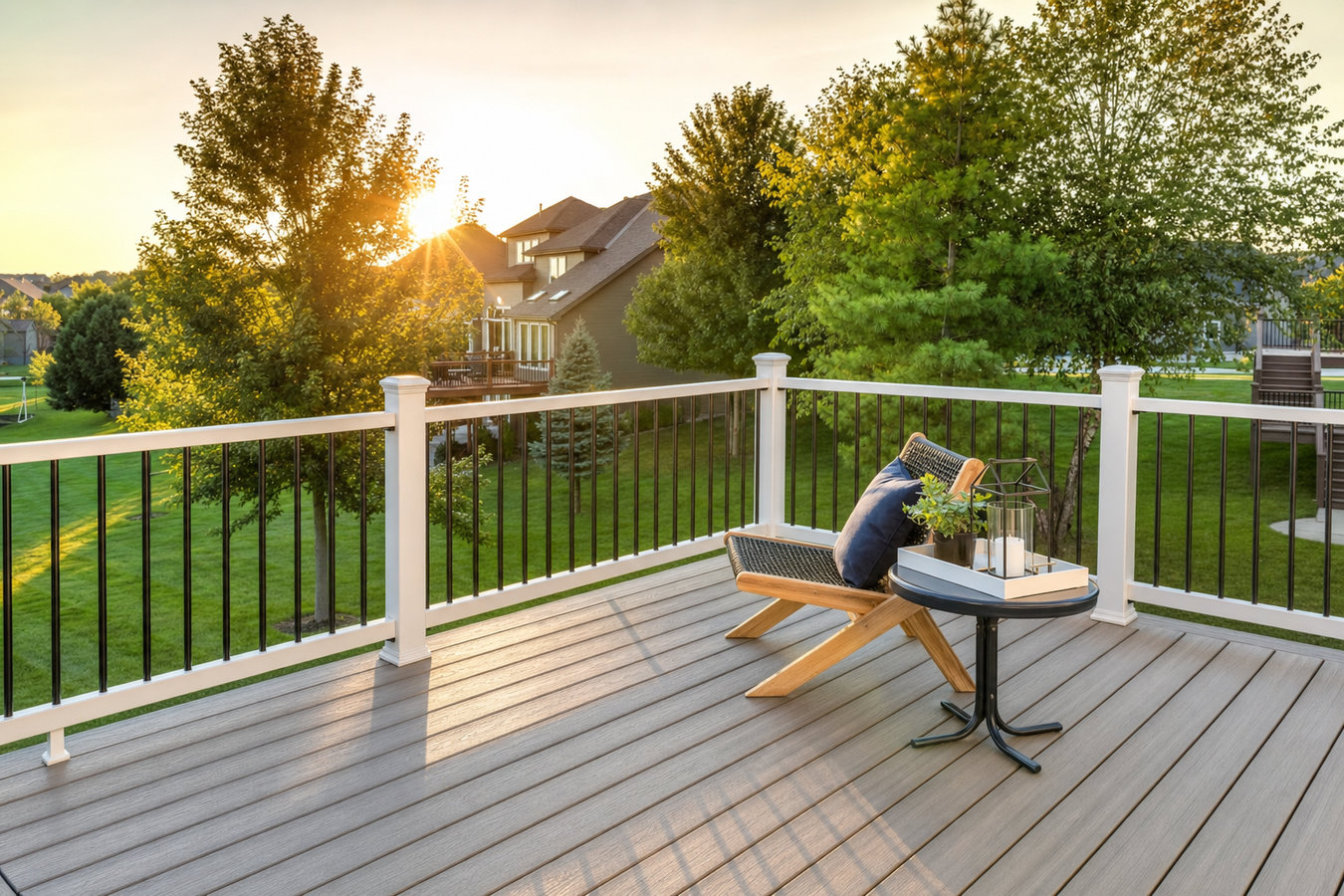
Deck railing installation in Sebastian, FL involves removing existing railing if present, anchoring new posts to the deck structure, and attaching rails and balusters using materials and hardware rated for coastal Florida conditions - most standard single-level jobs are completed in one to two days once the Indian River County permit is in hand.
If your current railing wobbles when you push on it, shows rust or rot at the post bases, or has gaps wide enough to worry about with young children around, those are safety problems, not cosmetic ones. A railing that moves means the anchoring has failed - and Sebastian's humidity and salt air from the Indian River Lagoon accelerate that process on materials that were not chosen for this environment. Homeowners who are also dealing with soft or damaged deck boards often discover the structural issues when they contact us about a railing replacement - our deck repair and replacement service handles both the structural and surface issues together, which is more efficient than addressing them separately.
Florida building rules require a railing on any deck surface 30 inches or more above the ground, and Indian River County requires a permit for new installation and full replacement work. That permit process - which we handle entirely on your behalf - includes an inspection by a county building official before the job is signed off. That independent check protects you and creates a documented record of the installation that stays with your property.
Stand at any post and push it firmly with both hands. If it moves, shifts, or feels loose at the base, the anchoring has failed. A railing that wobbles is not just an eyesore - it is a genuine safety hazard, especially if children or elderly family members use the deck regularly. This test takes thirty seconds and tells you everything you need to know about the railing's condition.
Press a screwdriver or your thumbnail into the wood near the base of each post where it meets the deck. If it sinks in easily or the wood crumbles, rot has set in and the post can no longer hold safely. This is one of the most common issues on older wood decks near the Indian River Lagoon - the combination of moisture and salt air accelerates rot at exactly the point where the post carries the most load.
If you see orange rust streaks, white powdery deposits, or pitting on metal railing surfaces or fasteners, the structural integrity may already be compromised even where it still looks mostly intact. Sebastian sits minutes from the Atlantic coast, and the salt air from the Indian River Lagoon eats through unprotected metal faster than most homeowners expect. Surface rust on a post base is often a sign the damage goes deeper than what is visible.
Older railings were sometimes built to standards that are no longer considered safe. If you can fit a standard soda can through the gap between any two balusters, the spacing is too wide by today's safety expectations. This is especially worth checking if you have young grandchildren visiting or if you are preparing to sell your home - a buyer's inspector will flag it, and it is better to address it before the listing than during the negotiation.
We install railing systems in three primary materials, each suited to different priorities and budgets - cable railing for decks is also available for homeowners who want an open sightline toward the water. Powder-coated aluminum is our most recommended option for Sebastian properties near the water - it resists the salt air and coastal humidity without rusting, does not need to be painted or sealed, and carries a long service life with minimal upkeep. Composite railing systems - made from a blend of wood fiber and plastic - offer a warmer appearance than aluminum while matching its low-maintenance performance. Pressure-treated wood railing is the most traditional choice and costs less upfront, but it requires regular sealing or staining in Florida's climate to prevent the warping and rot that Sebastian's humidity encourages. Every system we install uses marine-grade or stainless fasteners throughout - the hardware matters as much as the railing itself in a coastal environment. For homeowners who are also adding or replacing deck boards at the same time, our custom deck design and build service handles the full project as one coordinated scope.
Before any railing goes in, we assess the deck structure at every post anchor point - you cannot safely anchor posts into compromised framing or decking. If we find soft boards or structural issues during that assessment, we will tell you directly and provide options before the project begins. Post anchoring on every installation is done with hardware rated for Florida's wind-load requirements, which is especially relevant for elevated decks. For homeowners who are building a new elevated structure and need the full railing system included, our deck repair and replacement service coordinates both structural work and railing installation in one project.
Best for waterfront and near-water homes - resists salt air corrosion without painting or sealing, and comes in a range of colors to match HOA requirements or personal preference.
Low-maintenance and visually warmer than aluminum - a popular choice for homeowners who want a traditional railing look without the upkeep that wood requires in Florida's climate.
The traditional option for homeowners who prefer a natural wood appearance and are prepared to seal or stain regularly to maintain performance in Sebastian's humidity and sun.
Sebastian sits along the Indian River Lagoon and is just minutes from the Atlantic coast, which means salt moisture is a year-round factor for every outdoor material on your property. That coastal environment changes the railing conversation significantly. Standard residential-grade hardware - galvanized fasteners, uncoated steel brackets, or entry-level aluminum - deteriorates faster here than it would in an inland city. On an older waterfront or canal-front home, it is common to find original wood railings where the post bases have been rotting quietly for years, held in place by nothing more than friction and habit. Homeowners in Vero Beach and Indian River Shores face the same conditions - the salt air exposure is consistent across the entire Indian River County coastline, and the material selection conversation is the same whether the deck is on the lagoon or a few blocks inland.
Indian River County also falls under Florida's hurricane wind-load requirements, which specify how railing posts must be anchored - not just to hold people safely on a calm day, but to withstand the kind of wind loads Sebastian sees during storm season. A railing that passes a routine inspection can still fail in a serious storm if the post connections were not installed with that load in mind. We build every railing installation to those standards as a baseline. The Florida Building Commission and the American Wood Protection Association both publish standards that govern the materials and methods used in this type of coastal construction.
Reach out by phone or the contact form - we respond within one business day. We schedule a free on-site estimate where we look at your deck's current condition, the anchor points, and the framing. This visit also surfaces any structural issues that need to be addressed before new railing can go in, so there are no surprises after work starts.
After the visit, we provide a written estimate with material options and pricing. We walk you through the aluminum, composite, and wood choices - including what each means for maintenance and longevity in Sebastian's climate - so you can make the right call for your property and budget. No pressure, no obligation.
Once you approve the project and sign a contract, we apply for the building permit through Indian River County. You do not visit any office or make any calls. The permit typically processes within a few business days to a couple of weeks, and we schedule work to begin as soon as it is in hand.
Most standard jobs are completed in one day. The crew removes old railing if needed, sets and anchors posts first, then installs rails and balusters. Before leaving, we walk the railing with you - push on every post, check spacing, look at the finish. Then we schedule the county final inspection. Once it passes, the permit closes and the job is officially complete.
Free on-site estimate, no obligation. We handle the permit, the county inspection, and the HOA submission if your neighborhood requires it.
(772) 918-9088We do not use standard inland-grade hardware on Sebastian projects. Every railing installation specifies stainless or hot-dipped galvanized fasteners, post anchors rated for Florida's coastal wind requirements, and railing materials chosen for their proven performance in salt air and high humidity. The goal is a railing that still looks and performs well years from now, not one that passes an inspection today and corrodes next season.
We know how the Indian River County building department operates because we pull permits there regularly. We handle the application, the plan submission, and the final inspection scheduling - you never need to make a call to the county building office. A closed permit also creates a documented record of the installation that is valuable when you sell the property. The Indian River County Building Division is the governing authority, and working within that process is not optional.
You cannot anchor railing posts safely into decking or framing that is already compromised. Before any installation begins, we check the boards and structural members at every post location. If we find issues, we tell you what they are and what it would take to address them - not after the project starts, but during the estimate conversation, so there are no cost surprises mid-job.
Many of Sebastian's planned communities - including parts of Sebastian Highlands and newer subdivisions - have HOA rules about railing colors, materials, or styles. We ask about your HOA requirements on the first call and prepare the documentation your association needs before we finalize any design. That means no mid-project change orders because the association rejected a color or material we already ordered.
Together, these practices reflect how a contractor who actually works in this specific market approaches the job. We are not applying generic standards to a Sebastian property - we are building to what this climate, this county, and your specific lot require.
Start-to-finish design and construction for homeowners who want a purpose-built outdoor structure tailored to their lot and lifestyle.
Learn MoreBoard-level repairs, post replacement, and full structural overhauls for decks that are showing wear from Florida's heat and humidity.
Learn MoreSpring slots fill fast - lock in your project before hurricane season arrives and make sure your railing is inspected and solid before storm conditions test it.